- Client-Centered Therapy
- Cognitive Behavioral Therapy
- Dialectical Behavior Therapy
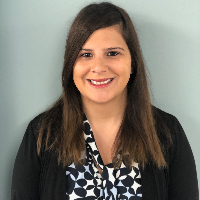
About Justine
Justine Alemany is a Licensed Clinical Social Worker (LCSW) in Florida with six years of clinical experience. She works with people facing trauma, addictions, grief, anxiety, mood disorders, and ADHD. She offers services in English and Spanish and blends several approaches to suit each person's needs.
She began as a graduate intern in an elementary school in Boston and later worked at an inpatient adolescent unit through UMass Medical School. There she treated youth with severe mental health concerns and supported families with counseling and psychoeducation.
After returning to Florida she worked in outpatient and residential substance use programs for adult women, focusing on trauma, substance use, depression, anxiety, and bipolar disorder. She then joined a Children's Advocacy Center in 2019, continuing work with children, adolescents, and adults who have experienced sexual abuse, domestic violence, grief, or difficult life changes.
Her practice emphasizes trauma-focused methods alongside other clinical approaches. She uses techniques that build coping skills and emotion regulation for everyday life. Justine describes therapy as a place to learn practical tools and reduce the impact of past events.
Clients can expect a mix of Client-Centered Therapy, Cognitive Behavioral Therapy, Dialectical Behavior Therapy, EMDR, and Motivational Interviewing when those approaches fit the presenting concerns. She aims to match methods to what helps each person make progress.
How her approaches work in online sessions
Client-Centered Therapy focuses on listening and responding to what matters most to the person. The therapist follows the client's lead and helps clarify goals and priorities, which can be useful when attention and follow-through are a concern.Cognitive Behavioral Therapy (CBT) helps people identify unhelpful thoughts and test new behaviors. It uses short, practical exercises that are easy to use between sessions to support organization, planning, and mood management.
Dialectical Behavior Therapy (DBT) teaches skills for emotion regulation, distress tolerance, and interpersonal effectiveness. These skills can help reduce impulsivity and improve consistency in daily routines.
Finding the right approach is part of the work. The therapist will collaborate with the client to decide which methods to try based on goals, preferences, and what seems to help. This makes sessions more focused and practical.
Confirm current session options before booking so you know how sessions are delivered. Online work can make scheduling easier and help fit sessions into a busy week. It can also allow shorter check-ins or sessions without video when that better fits daily life. Licensed professionals often use online sessions to keep therapy consistent while adapting methods to the client's routine.
Areas of expertise
Also works with
Additional focus areas
Therapeutic approaches
Experience
6+ years
Credentials
Florida
Languages
English, Spanish
Frequently asked questions
What kinds of problems does she address?
She works with trauma, addictions, grief, anxiety, mood disorders including bipolar, ADHD, and related stress and coping issues.
What is her therapeutic style?
Her style mixes client-centered care with practical techniques from CBT and DBT and trauma-focused methods to build coping and emotion regulation skills.
How much clinical experience does she have?
She has six years of experience, including school, inpatient adolescent, outpatient substance use, and advocacy center settings.
What are her credentials and where does she practice?
She is a Licensed Clinical Social Worker (LCSW) in Florida and practices there.
Can sessions be done in languages other than English?
Sessions are offered in English and Spanish.
Does she work with international clients?
She does not accept international clients at this time.
How are sessions billed?
Cost varies by location and sessions use a subscription model that can be canceled at any time.
How do I begin working with her?
Click the See online therapy options button, complete a short matching questionnaire, and schedule your first session.
Before you reach out
A profile shows the concerns a counselor lists; it is not a diagnosis, an ADHD assessment or a promise of results. Questions about evaluation or medication belong with a doctor or other prescriber. If you feel unsafe right now, call or text 988, or call 911.